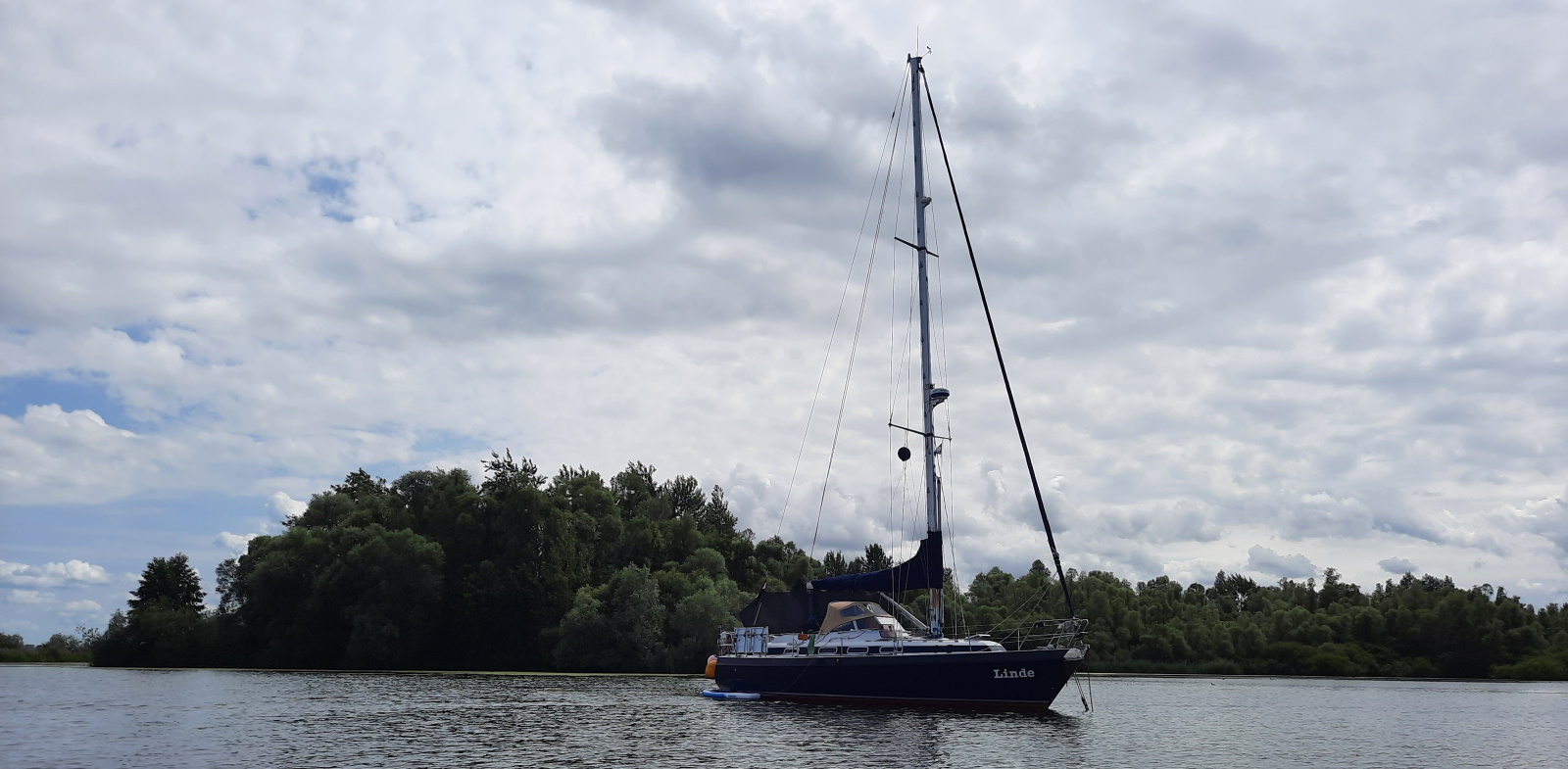
With a boat, usually comes an anchor. So too with Linde. But it is the superlative. We got 3 anchors (plus a small one from the dinghy). 3 anchors? Why is that?
The original anchor that came with the boat is OK but for the sea it’s a bit on the simple side. In other words, when the weather is calm, it manages to stay in place, but when there is a lot of wind and therefore waves, it is a challenge.
The second anchor is an anchor that can be used as a stern* anchor. You sometimes do this to keep the boat from lying completely with the wind. After all, the boat always defaults to lying behind the anchor because of the wind, but if the swell is coming from the side, you want the boat with the bow against the swell, not against the wind. You sail the stern anchor with the dinghy some distance away from the boat, drop it, and on manpower you then pull the boat with the stern toward the stern anchor.
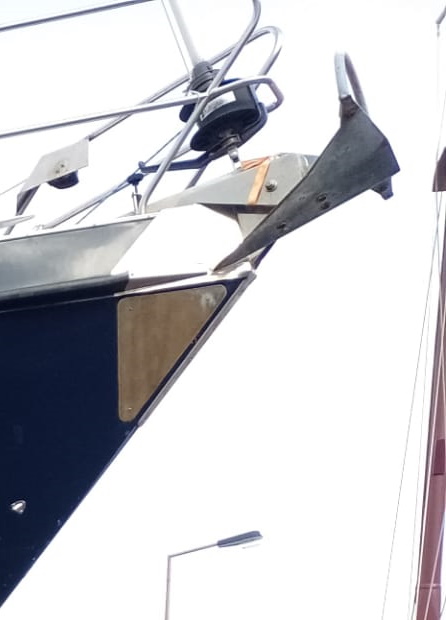
The third anchor is the replacement for the original anchor. This is a Rocna that is actually just too heavy according to the guidelines. But when anchoring at sea you would rather have an anchor that is too heavy than one that is too light. Such a Rocna anchor is a kind of triangle shovel with a roller handle. When it hits the bottom, it almost always turns with the tip to the ground. Then it digs in. On almost all surfaces this anchor does its job. Sand, mud, pebbles, clay. It doesn’t matter.
On Linde, this Rocna anchor sits on the bow.
With Casper we tried anchoring once, but it was not a success. Near Grou(where there is a very thick soft layer of peat soil) we tried the worthless anchor. We kept on dragging**
Now you must know that when anchoring the anchor is important, but even more important is the length of the chain. The rule is usually in normal calm weather 3 to 5 times the water depth. With Casper this had no effect. He kept dragging.
Linde has the anchor equipment well organized. Large Rocna anchor on the bow, 80 meters of chain available. An anchor winch and a lock to prevent the anchor from accidentally falling while sailing. So actually perfect, but yes… can we operate everything properly.
The first week of our vacation we moored in the harbor in Den Oever and then we actually wanted to anchor on the Ketelmeer. “Maybe it would be wise to test the anchor here?†asks Carla. That seems like a good idea indeed. I take the winch handle forward and try to loosen the winch. Hmm, how much force do you have to apply? On Casper I have already broken off a piece of the winch because I thought it was stuck (thought indeed, I must turn the other way). I don’t want to break things here. I decided to give Hans a call. He indicates what we thought, so just continue. With a lot of force the winch is released, but the anchor stays in place. So we give it some chain by hand, and yes. Now the anchor begins to fall. If such an anchor falls, your fingers should not be near it, because with brute force the chain goes out of the anchor bin, through the winch into the water. The winch is now turning, conclusion; a lot of salt in the winch, years not used.
When the anchor is on the ground, you have to brake the winch, otherwise the 80 meters of chain will be on the bottom like a heap. This is going well.
Ok, phase 1 successful. Now phase 2. Hoisting the anchor. Winching the chain in is going well. But then comes the anchor. This Rocna anchor has a very long schaft***. This means that first the schaft sticks out a long way before the anchor tilts and is back in line with the winch. Before we know it, this causes the chain to slip from the winch and the anchor to disappear into the water again with brute force. You’re tempted to intervene with your hands, but as mentioned, better not. Quickly the foot (with shoe) on the chain and most of the chain stays on board. Again apping Hans how he did it. Yes, just winch it up and push the chain down with your foot during the winch. OK, so with 2 hands on a winch and then with your foot guide the chain and the schaft. An acrobat on board would come in handy though.
When the anchor comes up for the second time it goes well. Not quite flawless, but good. Enough experience to anchor the next day.
When we arrive at the Ketelmeer the next day, we find a nice spot. There are red barrels on the right side but there are other boats and the map indicates that the depth should be possible. Because of the physical strength we decided that I will operate the anchor and Carla the boat. We put the boat with the point in the wind, the anchor falls, sail backwards a bit so that the chain is on the ground and not on the anchor. 2 meters deep water so 4*2 is 8 meters of chain. But yes… how much is 8 meters? At some point there will be links that are painted. Perhaps this is 10 meters? Hans later indicates that every 10 meters a number of links are painted.
When there is enough chain, Carla steers the boat backwards and then suddenly we are stationary. Is the anchor now stuck in the ground? I indicate that Carla may make more power with the engine. Linde is not going anywhere. Even more power backwards, as steady as a rock. That goes a little better than with Casper.
We’ll try the devil’s claw**** too. If you use this to let two lines go to the chain in a V-shape, the boat lies more quietly and the power of the boat does not come on the winch, but on the cleats*****
We lie there wonderfully and confidently we go through the night. The second night also goes perfectly. We have great confidence in this anchor system.
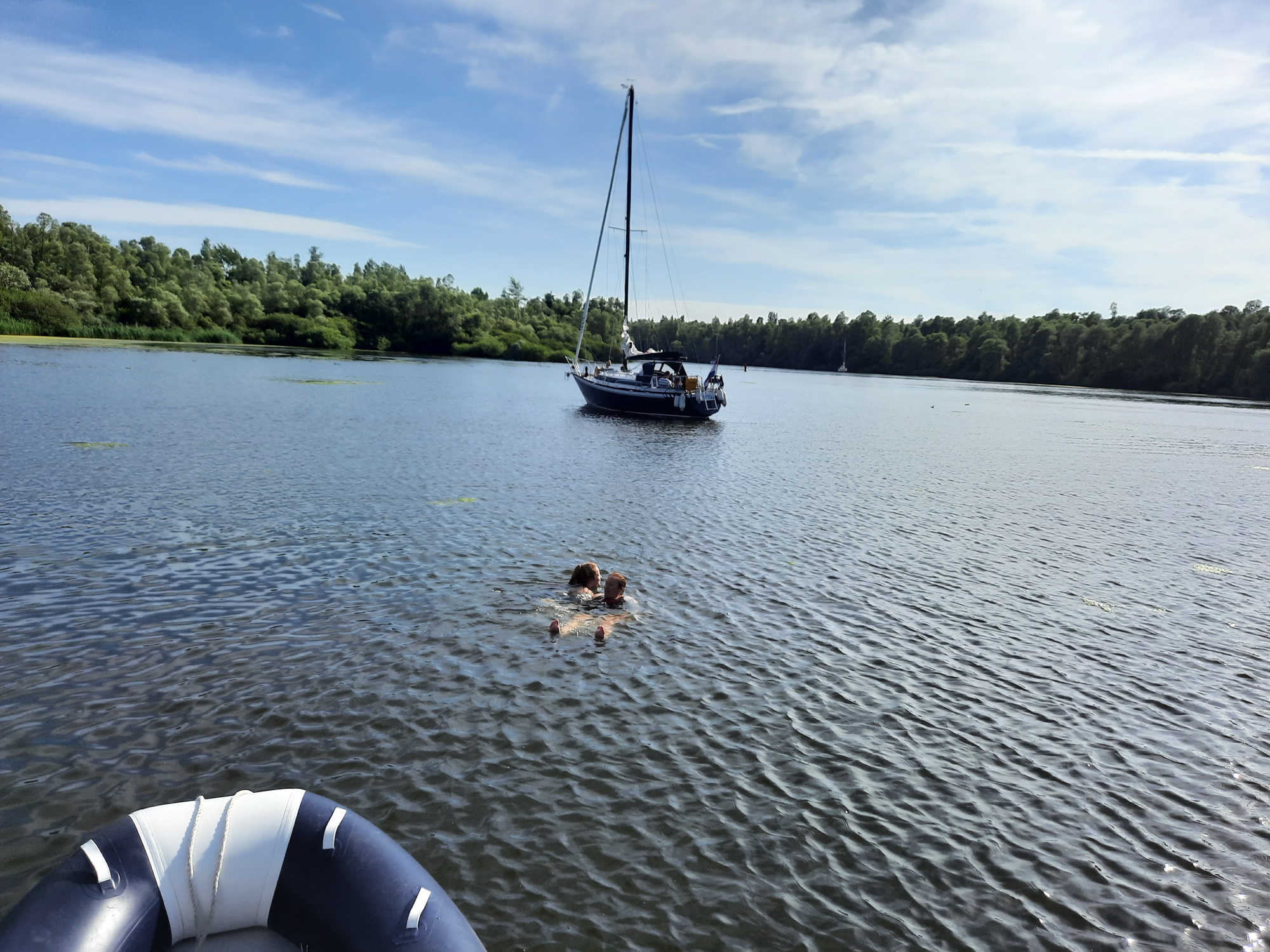
When we want to leave again, it’s just a matter of winching in all the chain and then lifting the anchor… It doesn’t work. No matter what I try in terms of strength. I tell Carla to sail over the anchor, thereby pulling the boat at a different angle to the anchor. And yes, it’s loose. Finally. Quickly retrieving it, the schaft over the dead end, Carla can start sailing and…… bam!!!! With brute force the anchor falls back to the bottom. I shout to Carla that the propeller must be turned off. You don’t want the propeller to hit the chain. Shit, my foot must of course be on the chain when I’m winching…. Trying again and now the anchor is coming right on board.
Looking at the anchor, I also understand why we were very stuck. There is still a huge lump of clay on the anchor. Water alone won’t wash it off, I have to “pick it off†with the back of the broom.
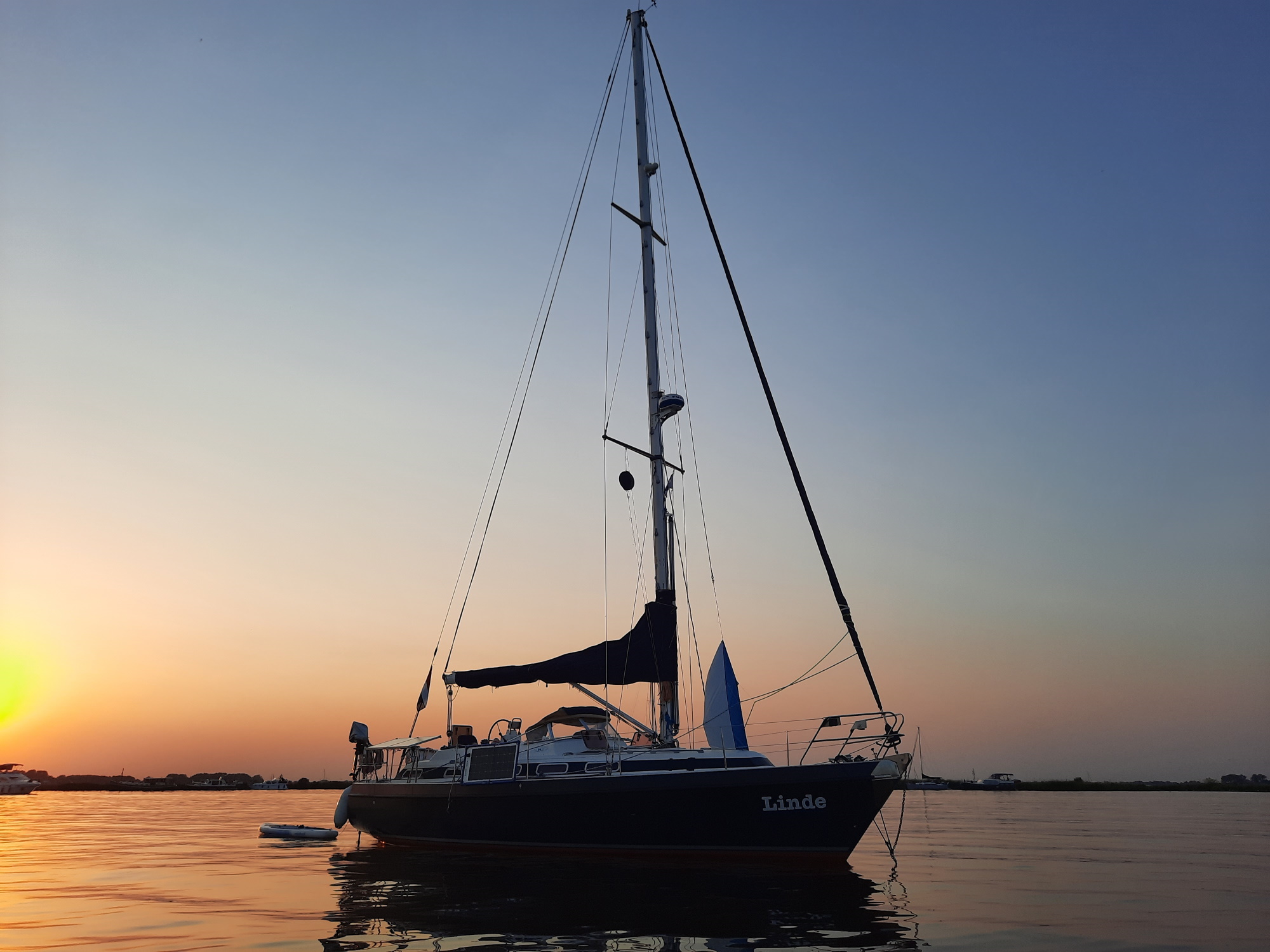
After this first time, we confidently anchor Linde a few more times. In the Frisian waters that’s no problem at all. Only at the Sneekermeer it went wrong. There was a strong wind, which means that when the anchor comes loose, you have to sail immediately. The swell on the point does not make it easier. The anchor did not line up with the winch when we retrieved it. Also, the anchor came on deck the wrong way around. In crazy positions on the bow I finally got the anchor back on deck normally. Unfortunately, I did warp the safety device.
The conclusion is that we can be confident behind the anchor, with enough chain Linde is not going anywhere. Only we have to make the necessary adjustments to bring the anchor in safely. You would just have to play acrobat with 2 or 3 meter high waves on the point. Not me!
* stern is the back of the boat.
** dragging is when the anchor does not stay in the ground and the boat drags the anchor further along the bottom each time
*** schaft is the shaft of the anchor
**** a hook that allows you to attach a line to the chain
***** cleats are metal fastenings on the boat for securing the boat
There are no comments on this blog yet. Feel free to let us know what you think about this blog.

 Nederlands
Your comment